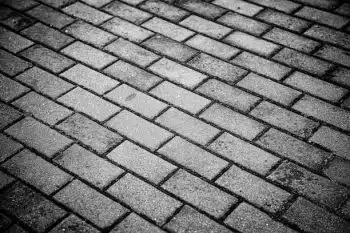
Slippery patio slabs are almost always caused by a thin film of algae, moss, or other organic growth that becomes slick when wet, not by the stone itself. The right fix depends on whether the surface is merely dirty or also deteriorating. Cleaning, restoration, and ongoing maintenance are different tools for different situations, and a proper assessment comes before choosing one.
Table of Contents
- Why do my patio slabs get slippery in the first place?
- What happens to the joints between patio slabs when they stay wet?
- Can I just clean slippery patio slabs myself, or do I need something more?
- When is cleaning enough, and when does a slippery patio need restoration?
- How do I keep algae and moss from coming back after cleaning?
- What about stains that cleaning alone won't remove?
- How does Elegant Estates of the Fingerlakes handle a slippery patio?
- Key Takeaways
- References
Why do my patio slabs get slippery in the first place?
The greenish, thin coating that develops on shaded, damp paving is usually algae, and it turns noticeably slick underfoot when wet. A homeowner describing this exact problem on Mumsnet reported a patio covered with a greenish film that made the surface dangerously slippery.
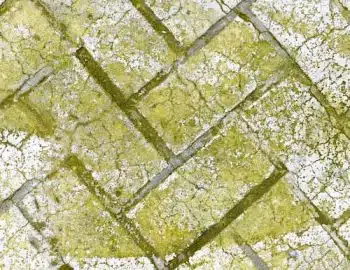
Shade, poor drainage, accumulated leaf litter, and debris all create the conditions algae needs. Central New York adds its own variables: damp springs, lake-effect moisture near the Finger Lakes, and long periods when surfaces stay cool and shaded. These conditions allow organic growth to establish and spread.
Dark organic growth, often called black algae, can create the same slick surface. Homeowners frequently mistake it for dirt or staining because it does not always look like the green film people expect. The paving material itself is not usually the problem. According to Patio Black Spot Removers, a slippery patio needs algae removed, not simply covered up.
What happens to the joints between patio slabs when they stay wet?
Persistent dampness and organic buildup create conditions where moss and weeds take hold in the joint gaps between slabs. Once roots establish, they hold moisture against the paving and make the surface more inviting for further growth. The joints become a moisture reservoir that keeps the patio wet long after the surrounding area has dried.
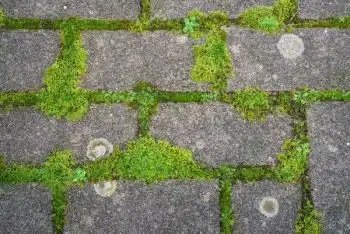
Failing joints let water sit at the surface instead of draining away. Over time, missing joint material can lead to loose or shifting pavers as the bedding beneath erodes. Algae alone does not directly break down every type of joint material. Moisture, freeze-thaw cycles, Vegetation like moss and weeds, and age all play a part in joint deterioration.
Joint condition is one of the first things to check when deciding between cleaning and restoration. A patio with intact joints and surface growth is a different project than one with empty joints and movement underfoot.
Can I just clean slippery patio slabs myself, or do I need something more?
Yes, homeowners can often clean surface growth themselves, but the method matters. Common approaches reported in real discussions include annual pressure washing, dilute bleach in a watering can, liquid cleaners, and even boiled water with a stiff broom, according to Mumsnet. One forum reply noted the problem returns roughly every other year after washing.
Pressure washing can be effective but needs care around joints and softer stone. DIY chemical mixes carry risk to nearby plants and surfaces, and results vary widely. Patio Black Spot Removers advises starting with a cleaner suited to the paving, brushing it across the affected area, and following product instructions for rinsing.
Cleaning removes algae, moss, and other surface buildup, but it does not correct loose, sunken, or uneven pavers. Those conditions may require paver repair or paver restoration to address the underlying issues. Any cleaning method or product should be suited to your paving material and joint condition to help avoid surface damage or loss of joint material.
Field Notes

Chris Negley
Owner, Elegant Estates of the Finger Lakes
The walkway she was worried about keeping
We had just finished installing a new paver walkway from a longtime client’s front stoop to the sidewalk at the street. She already had patterned bluestone at the front entry and along the side of the house. The stone on the side walkway was still in good shape, but the walk ran downhill and algae had made it slick. She worried that she or her husband would slip and get hurt.
When I explained how our EcoGuard service helps slow algae growth as part of ongoing paver maintenance, she asked if we could use it on the bluestone too. I told her we absolutely could. We first soft washed the side walkway to treat and rinse away the existing algae, then added the bluestone to her EcoGuard maintenance visits.
That was four years ago. She’s kept up with EcoGuard every year since, and the algae hasn’t returned on that walkway. She’s thrilled to have one less thing to worry about when she and her husband use the side walkway.
What I’d look at first
If a patio or walkway gets slick, especially on a slope, check whether algae is coating a surface that’s otherwise in good condition. On this walkway, cleaning took care of the existing buildup, and annual maintenance helped keep it from coming back.
When is cleaning enough, and when does a slippery patio need paver restoration?
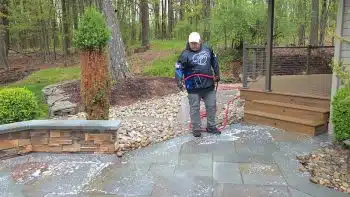
Cleaning is often sufficient when growth is caught early and the hardscape is structurally sound. A patio with intact joints, even pavers, and surface algae typically responds well to deep cleaning followed by ongoing maintenance. The goal is removing the organic film before it contributes to larger problems.
Paver restoration makes more sense when there are signs of structural change: missing joint material, loose or rocking pavers, settlement, or low spots that hold water. These conditions mean water is no longer moving away from the surface the way it should. Paver restoration can include cleaning, joint renewal, leveling, and repairs, but not every project includes every step.
The right scope comes from assessing the actual condition of the patio rather than assuming the worst or the cheapest option. A shaded patio with recurring moss may need a different approach than a walkway with loose pavers.
How do I keep algae and moss from coming back after cleaning?
Regrowth is normal in shaded, damp conditions. One forum reply on Mumsnet described the problem returning roughly every other year after pressure washing. The conditions that caused the growth usually remain unless something changes.
Practical prevention includes removing leaves and debris before they decompose on the surface, improving drainage and downspout flow, and trimming vegetation so the patio gets more air and sunlight. These steps help surfaces dry faster after rain.
At Elegant Estates, our EcoGuard service is a preventive maintenance program that helps slow the return of algae, moss, and other biological growth after cleaning or paver restoration. It is not a sealant but can be a substitute for future cleaning depending on your application frequency. The underlying guidance from Patio Black Spot Removers is that a slippery patio needs the growth removed, not covered up.
What about stains that cleaning alone won't remove?
Efflorescence, rust, grease from grills, and mineral deposits from spigots or irrigation water are different problems from algae. Efflorescence appears as a white mineral haze on the surface. Rust and grease often come from grills and metal fixtures placed on the patio.
These stains typically need targeted treatment rather than general cleaning. Results depend on the stain, the surface material, and how long the stain has been present. General cleaning removes organic growth but does not address every type of discoloration. According to Patio Black Spot Removers, professional treatment cost depends on the surface, the extent of growth, and the work involved.
How does Elegant Estates of the Fingerlakes handle a slippery patio?
A slippery patio can be a surface issue, a symptom of a deeper problem, or both. Chris Negley of Elegant Estates draws on nearly 30 years of experience and CMHA certifications in Interlocking Concrete Pavement and Segmental Retaining Walls to evaluate more than appearance alone. By examining joint condition, paver stability, drainage, and signs of base or bedding problems, he helps homeowners understand when cleaning and maintenance are sufficient—and when paver restoration or repair deserves consideration.
At the time of this publication, for a structurally sound patio with surface buildup, Paver Cleaning from $249 removes dirt, algae, mildew, and organic film. When joints are failing or pavers have shifted, Paver Restoration from $949 includes deep cleaning and joint renewal, with repairs recommended where needed. Paver Repair from $249 addresses sunken, uneven, or shifting pavers by lifting and resetting affected sections.
For rust, efflorescence, grease, and mineral stains, Specialty Stain Removal from $149 provides targeted treatment. After cleaning or restoration, EcoGuard from $249 helps slow the return of algae and moss on suitable hardscape surfaces.
Key Takeaways
- Slippery patio slabs are usually caused by a thin film of algae or organic growth that turns slick when wet, not by the paving material itself.
- Shade, poor drainage, and accumulated debris are the conditions that let algae and moss thrive on patios.
- Annual or biennial pressure washing is a common homeowner fix, but it does not address failing joints or settled pavers.
- Missing joint material, loose pavers, and low spots that hold water are signs that restoration or repair may be needed instead of cleaning alone.
- EcoGuard is a preventive maintenance program that helps slow the return of algae and moss after cleaning or restoration, not a sealant.
- Efflorescence, rust, grill grease, and mineral stains typically need targeted specialty stain removal rather than general cleaning.
- A free patio assessment is the practical first step to determine whether cleaning, restoration, repair, stain removal, or ongoing maintenance fits your patio.
References
- Help! Really slippery patio. What can we use on it before I fall on my arse? — Mumsnet, 2012-11-20
- How to Stop Your Patio From Being Slippery — Patio Black Spot Removers, 2026-10-20
